
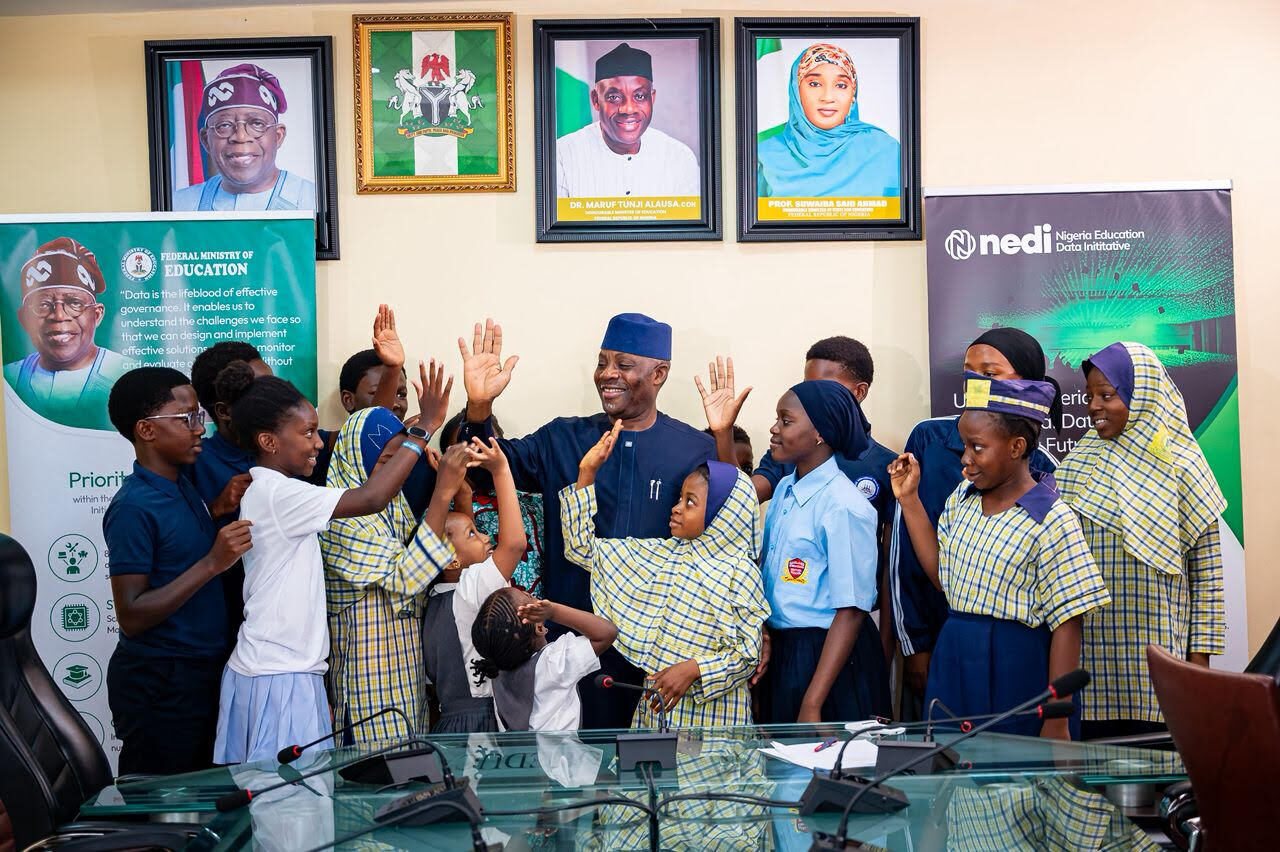
The air over Abuja buzzed with more than the usual hum of bureaucracy this Children’s Day. For once, the nation’s leaders weren’t just exchanging platitudes about the future—they were putting ink to paper, and, more importantly, drafting a roadmap that could finally turn Nigeria’s education crisis into an opportunity. In a country where 10.5 million children remain out of school, according to UNICEF’s latest estimates, the Federal Government’s renewed vow to empower every child through inclusive, quality education isn’t just a political soundbite. It’s a lifeline.
But what does that really mean for the millions of Nigerian children who still wake up to classrooms without desks, teachers without textbooks, or parents without the means to send them to school at all? The answers lie in the details—and in the government’s willingness to move beyond rhetoric.

From Rhetoric to Reality: What Inclusive Education Truly Requires
Inclusive education isn’t just about building more schools. It’s about dismantling the barriers that keep children out of classrooms in the first place. For Nigeria, that means confronting a tangled web of challenges: poverty, gender disparities, disability rights, and the stark urban-rural divide that leaves rural children with fewer opportunities than their city-dwelling peers. The government’s pledge, announced on Children’s Day 2026, promises to address these issues head-on—but can it deliver?
Consider the numbers. In the northern states, where poverty and cultural norms often collide, nearly 60% of girls never set foot in a secondary school. In the south, where private schools flourish, public institutions crumble under the weight of overcrowded classrooms and underpaid teachers. The government’s plan hinges on three pillars: infrastructure upgrades, teacher training, and targeted scholarships for marginalized groups. But will these measures reach the children who need them most?
Take the case of 12-year-old Amina from Kano. Her parents, subsistence farmers, can barely afford to feed their family, let alone pay for her school fees. Even if a school were within walking distance, cultural expectations might still keep her at home. The government’s pledge to “empower every child” means little to Amina unless it includes provisions for her family’s economic survival—and the cultural shifts required to let her learn.

The Role of Technology: A Double-Edged Sword for Nigeria’s Classrooms
In an era where artificial intelligence and digital learning tools are reshaping education globally, Nigeria stands at a crossroads. The government’s pledge mentions “quality education,” but what does that look like in a country where only 36% of households have internet access, according to the National Bureau of Statistics? The answer isn’t to abandon technology but to wield it strategically.
Imagine solar-powered tablets distributed to remote schools, preloaded with offline educational content. Or a national digital library where students in Lagos can access the same resources as those in rural Zamfara. These aren’t pipe dreams—they’re already being piloted in states like Ekiti and Rivers. The challenge is scaling these innovations without leaving behind the children who need them most.
Yet, technology alone won’t solve Nigeria’s education crisis. It can’t build classrooms, train teachers, or pay school fees. It can, however, bridge gaps in ways that brick-and-mortar schools never could. The key is integration: pairing digital tools with traditional teaching methods to create a hybrid model that works for Nigeria’s diverse landscape.

Teacher Training: The Forgotten Frontline of Education Reform
No education system is stronger than its teachers. Yet in Nigeria, teachers are often the weakest link in the chain. Underpaid, undervalued, and overworked, they struggle to deliver quality education in classrooms that are crumbling around them. The government’s pledge to empower children must include a parallel commitment to empowering teachers.
This means more than just raising salaries (though that’s a start). It means investing in professional development, providing mental health support, and ensuring teachers have the resources they need to do their jobs. In a country where teacher absenteeism is rampant—some estimates suggest up to 20% of teachers are absent on any given day—retention and morale are just as critical as recruitment.
Take the story of Mr. Ibrahim, a primary school teacher in Maiduguri. For years, he taught in a makeshift classroom with no chairs, no blackboard, and no textbooks. His students, displaced by insurgency, had seen more trauma than most adults. Yet, despite the odds, Mr. Ibrahim refused to quit. His dedication is a testament to the resilience of Nigeria’s educators—but it’s also a indictment of a system that forces them to work miracles with nothing.
The government’s pledge must translate into real change for teachers like Mr. Ibrahim. That means not just throwing money at the problem but reimagining how teachers are trained, supported, and rewarded. It means creating a culture where teaching isn’t just a job but a vocation worthy of respect.

Breaking the Cycle: How Economic Empowerment Fuels Education
Education doesn’t exist in a vacuum. It’s inextricably linked to a child’s home life, their family’s income, and the broader economic landscape of their community. The government’s pledge to empower children through education must therefore include measures to lift families out of poverty. After all, how can a child focus on algebra when they’re hungry? How can a girl attend school when her parents see marriage as her only path to security?
Nigeria’s social protection programs, such as the National Social Investment Programme (NSIP), have made strides in addressing poverty. But these programs often operate in silos, disconnected from the education sector. To truly empower children, the government must integrate its poverty alleviation efforts with its education initiatives. That means linking school feeding programs to cash transfers, ensuring that families receive support only if their children attend school, and expanding vocational training for adolescents who can’t afford formal education.
Consider the success of Rwanda’s “One Cow Per Poor Family” program, which provided livestock to impoverished households in exchange for school attendance. The result? A 15% increase in primary school enrollment within five years. Nigeria doesn’t need to replicate Rwanda’s model exactly, but it can learn from its approach: tying economic empowerment to education outcomes.
- Cash transfers linked to school attendance, with bonuses for girls’ education.
- School feeding programs expanded to cover all public primary schools, ensuring no child attends class on an empty stomach.
- Vocational training for out-of-school adolescents, giving them marketable skills and a path to economic independence.
The Cultural Shift: Redefining What It Means to Be a Child in Nigeria
No education reform can succeed without addressing the cultural attitudes that perpetuate inequality. In many Nigerian communities, children—especially girls—are seen as economic liabilities rather than assets. Early marriage, child labor, and gender-based violence remain pervasive, despite laws aimed at protecting children. The government’s pledge to empower every child must therefore include a cultural revolution: one that challenges these norms and redefines the value of childhood.
This isn’t just the government’s responsibility. It’s a collective effort involving religious leaders, traditional rulers, parents, and the media. Campaigns like the “Not Too Young to Lead” initiative have shown that cultural change is possible—but it requires sustained, targeted efforts. The government must partner with civil society organizations to amplify messages of empowerment, using everything from radio dramas to community theater to drive home the importance of education.
Take the case of 14-year-old Hauwa in Bauchi State. Her parents arranged her marriage to a 40-year-old man, citing financial hardship. But Hauwa had other plans: she wanted to become a doctor. With the help of a local NGO, she was able to delay her marriage and return to school. Her story is a reminder that cultural change isn’t just about policy—it’s about people.
Accountability: The Missing Piece in Nigeria’s Education Pledge
Promises are easy to make. Delivering on them is the hard part. For Nigeria’s education pledge to be more than just words on paper, it must include robust accountability mechanisms. That means setting clear, measurable targets—such as reducing the number of out-of-school children by 50% within a decade—and establishing independent oversight bodies to track progress.
It also means transparency. Parents, teachers, and students must have access to data on school performance, teacher absenteeism, and resource allocation. Without this information, it’s impossible to hold leaders accountable—or to celebrate successes when they happen. The government’s pledge must therefore include a commitment to open data, ensuring that every Nigerian can see where their tax naira is going and whether it’s making a difference.
Consider the case of the Universal Basic Education Commission (UBEC). Despite receiving billions in funding annually, UBEC’s impact has been uneven. Some states have seen dramatic improvements in school enrollment and retention, while others lag far behind. The difference? Accountability. States with strong oversight and community engagement have delivered results; those without have floundered. The government’s pledge must ensure that every state—rich or poor, urban or rural—is held to the same standard.
Looking Ahead: Can Nigeria’s Children’s Day Pledge Become a Reality?
The road to inclusive, quality education in Nigeria is long and fraught with obstacles. But the government’s renewed pledge on Children’s Day 2026 offers a glimmer of hope. The question is whether this pledge will translate into action—or whether it will join the graveyard of unfulfilled promises.
For Amina in Kano, for Hauwa in Bauchi, and for millions of other Nigerian children, the stakes couldn’t be higher. Education isn’t just about reading, writing, and arithmetic. It’s about breaking cycles of poverty, challenging cultural norms, and building a future where every child has the opportunity to thrive. The government’s pledge is a step in the right direction, but it’s only the first step. The real work begins now.
As Nigeria celebrates Children’s Day, let’s not just honor the children of today with empty words. Let’s give them the tools they need to shape the Nigeria of tomorrow.
Copyright notice: Images and source material are credited to their respective owners/source (original source where available). If you are the copyright owner and want an image or content removed, please contact us at topix.news/contact-us; we will review and remove it promptly.

Topix News Desk is a digital editorial team focused on delivering clear, timely, and useful news coverage for readers worldwide. Our reporting highlights African news with global context, including politics, business, economy, technology, health, sports, entertainment, travel, and culture. We aim to publish accessible, well-structured, and informative articles that help readers understand the stories shaping Africa and the world.