
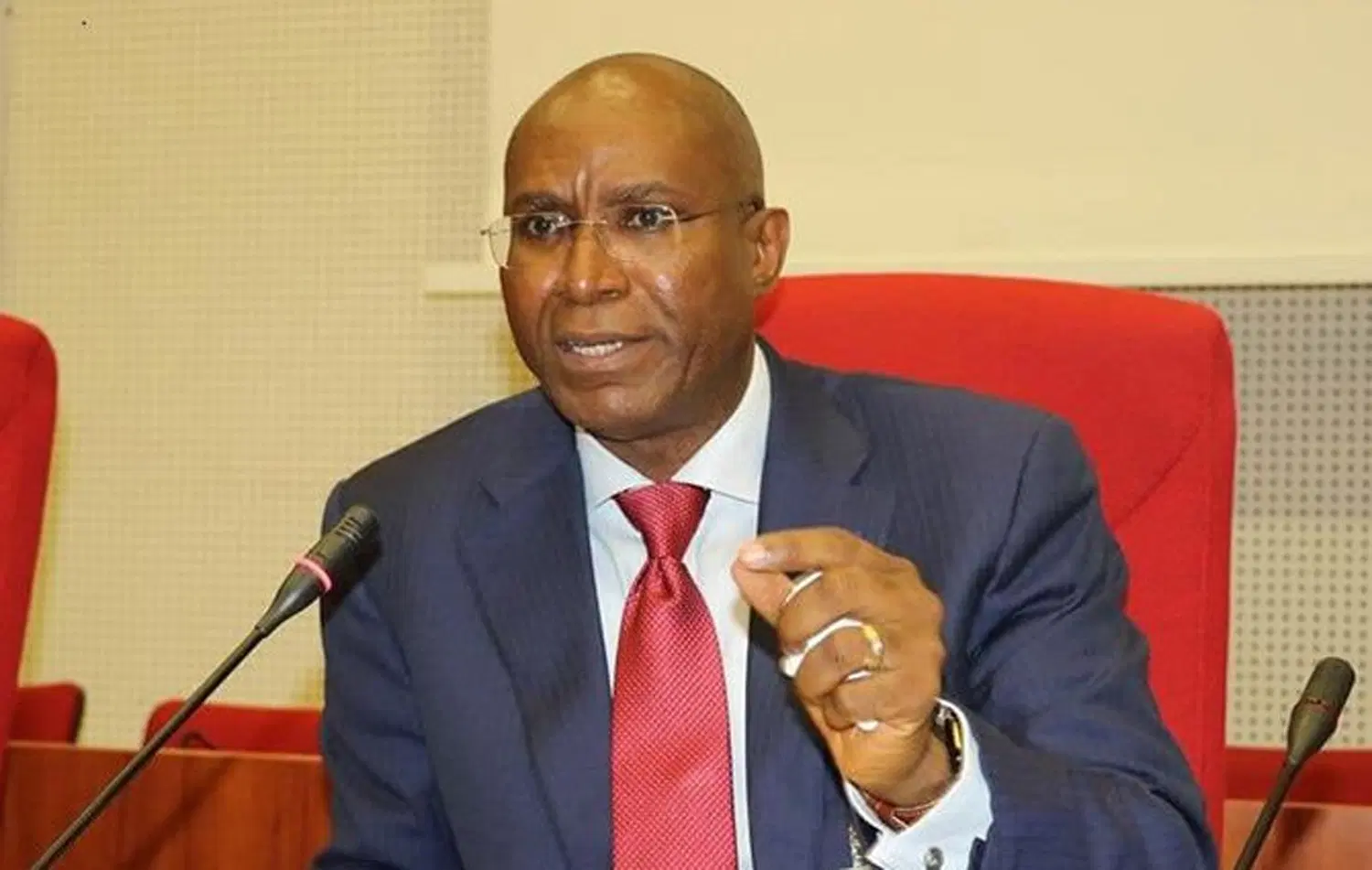
Nigeria stands at a pivotal moment as the 2027 presidential election looms on the horizon. The nation’s political landscape has always been a dynamic force, but this cycle feels different—more urgent, more divisive, and perhaps more defining than any in recent memory. At the heart of this unfolding drama is a striking endorsement that has sent ripples across the political spectrum. Former Deputy Senate President Ovie Omo-Agege, a figure known for his sharp political instincts and unwavering principles, has thrown his weight behind Labour Party’s Peter Obi. Yet, in a move that has both intrigued and confounded analysts, Omo-Agege has also lent his voice to the chorus of support for Bola Tinubu’s economic reforms—a set of policies that have reshaped Nigeria’s financial trajectory in ways both celebrated and criticized.
The timing of this declaration could not be more consequential. With Africa’s largest economy still grappling with the aftershocks of inflation, currency devaluation, and a lingering sense of economic uncertainty, Omo-Agege’s words carry weight far beyond the usual political posturing. They reflect a nation wrestling with its identity: a country eager for change but wary of abandoning the hard-won progress of recent years. This is not just a story about politics; it is a narrative about Nigeria’s soul.

From Senate Floor to Campaign Trail: Omo-Agege’s Political Evolution
Ovie Omo-Agege’s journey from the corridors of power in Abuja to the campaign trail has been nothing short of a political odyssey. As Deputy Senate President, he was a key architect of some of Nigeria’s most contentious but transformative legislation. His tenure was marked by a blend of legislative prowess and unapologetic confrontation with the status quo—qualities that endeared him to some and alienated him from others. Yet, his decision to support Peter Obi, a figure who represents a stark departure from the traditional power structures, signals a shift that transcends party lines.
What does this shift mean for Nigeria’s political future? For Omo-Agege, it appears to be less about blind allegiance and more about a strategic acknowledgment of the moment. The reforms introduced under President Bola Tinubu’s administration, while controversial, have undeniably altered Nigeria’s economic landscape. From the removal of fuel subsidies to the unification of the foreign exchange market, these policies have been both a shock to the system and a necessary jolt. Omo-Agege’s endorsement of Obi does not negate his belief in these reforms; rather, it suggests a recognition that Nigeria’s next chapter must be written with a different pen.
The Reform Paradox: Progress with a Price
There is no denying that Bola Tinubu’s economic reforms have left an indelible mark on Nigeria. The removal of fuel subsidies, a decision that sent shockwaves through the economy, was framed as a necessary evil—a bitter pill to swallow for a nation addicted to cheap fuel. The immediate aftermath was chaos: long queues at petrol stations, soaring transportation costs, and a palpable sense of frustration among ordinary Nigerians. Yet, beneath the surface of public discontent, a quieter transformation was underway. The unification of the foreign exchange market, the introduction of new fiscal policies, and the push for greater transparency in government spending were all steps toward a more disciplined and competitive economy.
But progress, as history has shown, is rarely painless. The reforms have disproportionately affected the most vulnerable, widening the gap between Nigeria’s haves and have-nots. Inflation has surged, eroding purchasing power and pushing millions deeper into poverty. Small businesses, already battered by years of economic instability, have struggled to survive. Critics argue that the reforms were implemented with little regard for the social safety nets that could have cushioned the blow. Supporters, however, point to the long-term benefits: a more stable naira, increased foreign investment, and a renewed sense of confidence in Nigeria’s economic potential.
Omo-Agege’s acknowledgment of these reforms is a rare moment of political candor in an era where leaders often retreat into rhetoric. It is a reminder that progress is not a monolith; it is a mosaic of gains and losses, victories and sacrifices. The question now is whether Nigeria can build on the foundation laid by Tinubu’s administration without repeating the mistakes of the past.

Peter Obi: The Outsider Who Challenges the Status Quo
Peter Obi’s rise from relative obscurity to the forefront of Nigeria’s political conversation is a testament to the power of ideas over entrenched interests. A former governor of Anambra State, Obi’s tenure was defined by a no-nonsense approach to governance, a commitment to fiscal prudence, and a refusal to bow to the whims of political godfathers. His presidential ambitions, initially dismissed as a long shot, have gained traction precisely because he represents something different: a break from the old guard, a promise of renewal, and a vision for a Nigeria that prioritizes competence over cronyism.
Omo-Agege’s endorsement of Obi is not merely a political calculation; it is a statement of faith in a new kind of leadership. In a country where politics is often reduced to ethnic and regional calculations, Obi’s candidacy offers a refreshing alternative. His economic background—rooted in private-sector discipline—sets him apart from the traditional political class, which has long been synonymous with corruption and inefficiency. Yet, Obi’s challenge is formidable. He must navigate a political landscape dominated by entrenched interests, a skeptical electorate, and the weight of Nigeria’s complex socio-economic realities.
For Obi, the road to Aso Rock is paved with obstacles. The Labour Party, though growing in influence, remains a David in a political arena dominated by Goliaths. The All Progressives Congress (APC) and the Peoples Democratic Party (PDP) have deep roots, vast resources, and decades of experience in the art of political survival. Obi’s appeal lies in his ability to connect with a younger, more aspirational generation of Nigerians who are hungry for change. His message resonates with those who see the 2027 election not as a choice between parties, but as a referendum on Nigeria’s future.
Nigeria’s 2027 Election: A Crossroads for Africa’s Giant
The 2027 presidential election is more than a contest between individuals; it is a defining moment for Nigeria and, by extension, for Africa. As the continent’s most populous nation and largest economy, Nigeria’s trajectory has far-reaching implications. The outcome of this election will shape not only Nigeria’s economic policies but also its role on the global stage. Will Nigeria continue its cautious march toward economic stability, or will it pivot toward a more inclusive, equitable model of development? The answer lies in the hands of the electorate—and in the choices made by its leaders.
Omo-Agege’s endorsement of Obi is a signal that the winds of change are blowing. It is a recognition that Nigeria cannot afford to cling to the past while the world moves forward. Yet, it is also a reminder that change, no matter how necessary, is not a panacea. The reforms of the past few years have laid a foundation, but the real work lies ahead. Nigeria must confront its deep-seated challenges: corruption, insecurity, and the need for structural reforms in education, healthcare, and infrastructure. The next president will inherit a nation at a crossroads—one that demands bold leadership, unwavering integrity, and a commitment to the common good.
The 2027 election is not just about who will occupy the presidency; it is about the kind of Nigeria its citizens want to build. Will it be a nation that rewards competence and innovation, or one that perpetuates the cycles of patronage and mediocrity? Will it embrace the reforms that have begun to reshape its economy, or will it retreat into the comfort of the familiar? These are the questions that will define Nigeria’s next chapter—and the answers will reverberate across the continent.
Beyond the Headlines: The Human Cost of Nigeria’s Economic Transition
Amid the political posturing and policy debates, it is easy to lose sight of the human stories behind Nigeria’s economic transition. The reforms championed by Tinubu’s administration have touched millions of lives, often in ways that are invisible to the casual observer. For the market trader in Lagos struggling to afford basic necessities, the removal of fuel subsidies is not an abstract economic policy; it is a daily reality that forces her to make impossible choices. For the young entrepreneur in Port Harcourt trying to scale a business, the unification of the foreign exchange market is not just a policy shift; it is an opportunity—or a barrier—to growth.
Omo-Agege’s endorsement of Obi is, in part, a recognition of these realities. It is a call to balance the demands of economic reform with the needs of ordinary Nigerians. Obi’s campaign has emphasized social welfare, education, and job creation—areas where the Tinubu administration’s reforms have yet to deliver tangible results. The challenge for Nigeria’s next leader will be to ensure that progress is not measured solely in macroeconomic indicators, but in the lives of its people.
This is where the true test of leadership lies. Nigeria’s economic transition has been painful, but it has also been necessary. The question now is whether the next government can build on this foundation without leaving behind those who have borne the brunt of the changes. Can Nigeria achieve growth that is both sustainable and inclusive? The answer will shape the nation’s future for decades to come.
The Road Ahead: Unity, Vision, and the Nigerian Dream
As Nigeria stands on the precipice of a new political era, the stakes could not be higher. The 2027 election is not just about choosing a president; it is about defining the soul of a nation. Omo-Agege’s endorsement of Obi is a reminder that politics is not a zero-sum game. It is possible to honor the past while embracing the future, to acknowledge the necessity of reform while demanding accountability, and to strive for progress without sacrificing the values that bind a diverse nation together.
For Nigeria to thrive, it must cultivate a sense of unity that transcends ethnic, regional, and religious divides. It must foster a vision that inspires hope and ambition, particularly among its youth. And it must demand leadership that is not only competent but also compassionate—leaders who understand that the true measure of a nation’s success lies not in its GDP, but in the well-being of its people.
The road ahead will be fraught with challenges, but it is also paved with opportunity. Nigeria has the potential to be a global powerhouse, a beacon of democracy and innovation in Africa. The choices made in the coming years will determine whether that potential is realized. For Omo-Agege, Obi, and millions of Nigerians, the journey has only just begun.
Copyright notice: Images and source material are credited to their respective owners/source (original source where available). If you are the copyright owner and want an image or content removed, please contact us at topix.news/contact-us; we will review and remove it promptly.

Topix News Desk is a digital editorial team focused on delivering clear, timely, and useful news coverage for readers worldwide. Our reporting highlights African news with global context, including politics, business, economy, technology, health, sports, entertainment, travel, and culture. We aim to publish accessible, well-structured, and informative articles that help readers understand the stories shaping Africa and the world.