
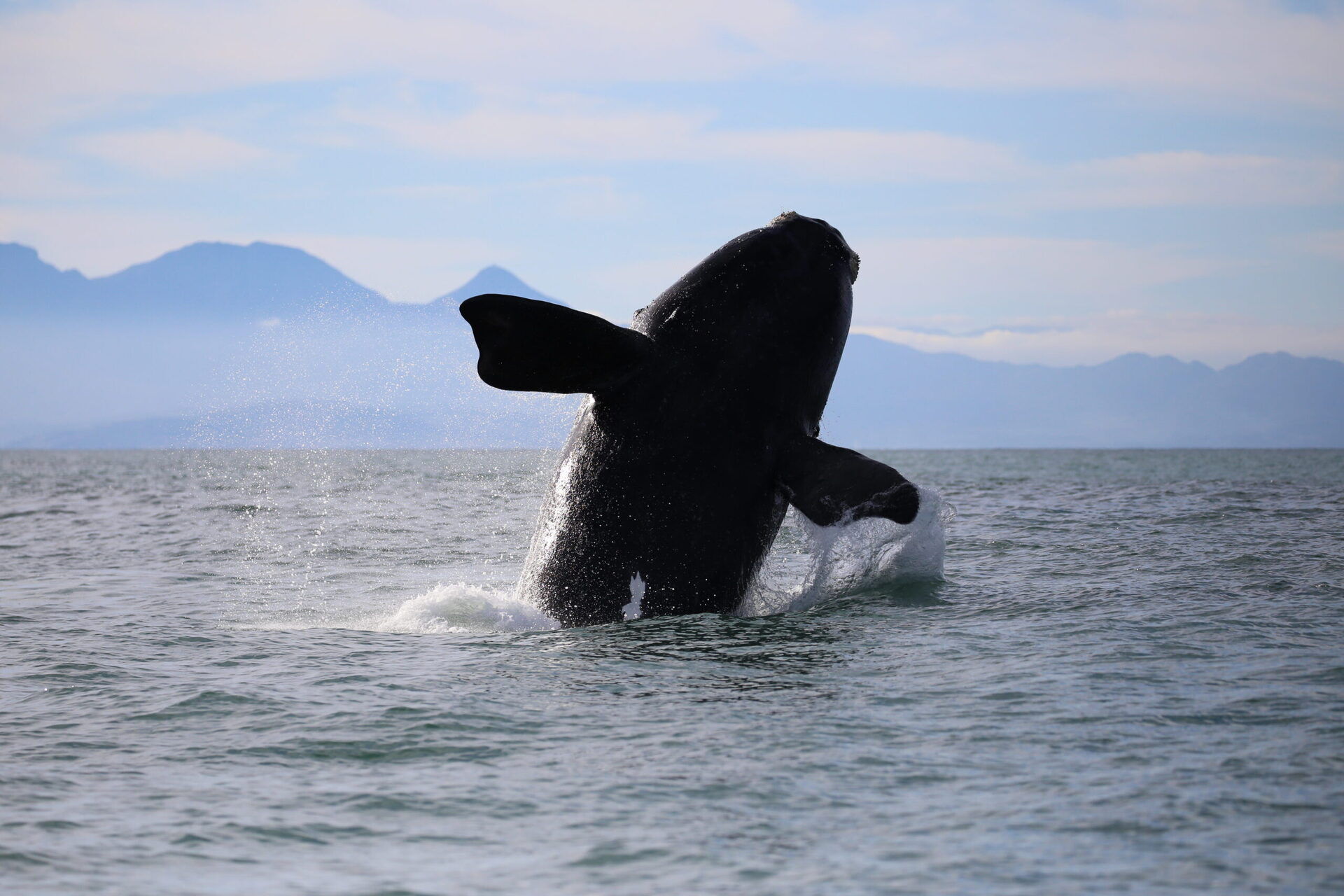
The Cape of Good Hope, long a maritime crossroads, now faces an unexpected crisis: a surge in shipping traffic is colliding with one of the ocean’s most majestic inhabitants. As global trade routes shift to avoid geopolitical hotspots, South Africa’s western coastline has become a bottleneck for vessels, pushing them perilously close to the feeding grounds of endangered southern right whales. Scientists warn that this growing overlap is not just a collision course—it’s a ticking time bomb for marine life.

For centuries, the Cape’s waters have teemed with life, from the towering whales that breach the surface to the tiny krill they devour. But today, the rhythm of the sea is being disrupted by an unlikely culprit: the global shipping industry. With traditional routes through the Red Sea and Suez Canal disrupted by conflict and restrictions, vessels are taking the longer, riskier detour around Africa’s southern tip. The result? A 30% spike in maritime traffic off South Africa’s west coast since early 2025, according to marine conservation groups monitoring the shift.
Why the Cape’s whales are in the shipping lane’s crosshairs
The southern right whale, a slow-moving giant that can weigh up to 60 tonnes, is particularly vulnerable to vessel strikes. Unlike their faster cousins, these whales spend hours at the surface, filtering food from the water. Their coastal habitats—stretching from Namibia to the Western Cape—have become prime real estate for both shipping lanes and whale populations. When ships cut through these waters at speeds of 15 knots or more, the consequences are often fatal.
“The whales don’t have a chance,” says Dr. Naledi Mokoena, a marine biologist at the University of Cape Town. “They can’t detect the low-frequency rumble of a ship’s engines until it’s too late. By then, the impact is inevitable.” Mokoena’s team has documented a 40% rise in whale carcasses washing ashore in the past 18 months, many bearing the unmistakable fractures of ship collisions. The deaths aren’t just a tragedy for biodiversity; they’re a warning sign for an ecosystem already strained by climate change and overfishing.
A perfect storm: Climate, conflict, and commerce
The surge in shipping isn’t happening in a vacuum. Climate change has already altered the whales’ migration patterns, pushing them closer to shore in search of cooler waters. Meanwhile, the war in Ukraine and Houthi attacks in the Red Sea have forced commercial vessels to abandon the shorter Suez route, funneling them toward the Cape. The irony? The very detour meant to avoid conflict is now creating a new kind of environmental crisis.
Shipping companies argue that rerouting is a necessary business decision. “We’re not ignoring the risks,” says a spokesperson for a major international shipping line operating in the region. “But the alternative—delayed deliveries, higher costs, and supply chain disruptions—would be catastrophic for global trade.” The industry points to voluntary speed restrictions in whale-heavy zones, but critics say these measures are too little, too late. “Voluntary guidelines don’t save whales,” counters Mokoena. “We need enforceable speed limits and designated shipping lanes that keep vessels away from critical habitats.”
Can technology offer a lifeline?
In a bid to mitigate the damage, researchers are turning to innovation. Acoustic buoys, equipped with sensors, are being tested to detect whale calls and alert nearby ships. Meanwhile, satellite tracking is helping scientists map whale movements in real time, providing data that could guide safer shipping routes. But technology alone won’t solve the problem. “We need a multi-pronged approach,” says Mokoena. “Stricter regulations, better enforcement, and collaboration between governments, scientists, and the shipping industry.”
South Africa’s government has taken tentative steps. In 2025, the Department of Forestry, Fisheries and the Environment announced plans to designate two “whale safety zones” along the west coast, where vessels would be required to slow to 10 knots during peak migration seasons. The move was hailed as a step in the right direction, but activists argue it doesn’t go far enough. “These zones cover only a fraction of the whales’ habitat,” says a representative from the South African Whale and Dolphin Trust. “We’re playing catch-up while the clock ticks toward disaster.”
The human cost: Communities caught in the middle
The crisis isn’t just ecological—it’s economic. Coastal communities in the Western Cape and Northern Cape rely on whale-watching tourism, a multimillion-dollar industry that could collapse if whale populations dwindle. Local guides, who once led daily excursions to spot breaching whales, now report fewer sightings. “Last season, we saw half the number of whales we used to,” says Thando Dlamini, a whale-watching guide in Hermanus. “Tourists are disappointed. Business is suffering.”
For Dlamini and others, the issue is personal. “These whales are part of our heritage,” she says. “They’ve been coming to our shores for centuries. If we lose them, we lose a piece of who we are.” The sentiment echoes across the region, where whales are woven into folklore, art, and even the names of towns. But heritage alone won’t protect them from steel hulls and propeller blades.
What’s next for Southern Africa’s whales?
The path forward is fraught with challenges. International pressure is mounting on shipping companies to adopt greener practices, but profit margins often take precedence. Meanwhile, climate change continues to reshape the ocean, pushing whales into uncharted waters—literally. Scientists warn that without urgent action, the southern right whale could face local extinction in South African waters within decades.
For now, the whales remain in the crosshairs. But the fight to save them is far from over. Advocacy groups are pushing for a global treaty to protect marine life from shipping threats, while researchers refine technologies to reduce collisions. In South Africa, activists are demanding that the government expand whale safety zones and enforce stricter penalties for vessels that violate speed limits.
The Cape of Good Hope may still be a beacon for sailors, but its waters are crying out for mercy. As the world’s shipping lanes shift, the question remains: Will humanity reroute its priorities before it’s too late?
Key takeaways for Southern Africa news today:
- Shipping rerouting: Global trade disruptions have forced a 30% increase in vessels passing South Africa’s west coast, intensifying overlap with whale habitats.
- Whale vulnerability: Southern right whales, slow-moving and surface-feeding, are highly susceptible to vessel strikes, with a 40% rise in carcasses documented in recent years.
- Climate and conflict: Climate change and geopolitical tensions are exacerbating the crisis, pushing whales closer to shore and ships into their paths.
- Human impact: Coastal communities dependent on whale-watching tourism face economic losses as whale sightings decline.
- Potential solutions: Stricter regulations, speed limits, acoustic detection systems, and expanded whale safety zones are among the measures being proposed to mitigate the threat.
The story of Southern Africa’s whales is a microcosm of a larger global dilemma: How do we balance the demands of commerce with the needs of nature? The Cape’s waters, once a symbol of harmony between man and sea, now stand at a crossroads. The choices made in the coming years will determine whether the whales—and the ecosystems they sustain—will survive the storm.

Topix News Desk is a digital editorial team focused on delivering clear, timely, and useful news coverage for readers worldwide. Our reporting highlights African news with global context, including politics, business, economy, technology, health, sports, entertainment, travel, and culture. We aim to publish accessible, well-structured, and informative articles that help readers understand the stories shaping Africa and the world.