
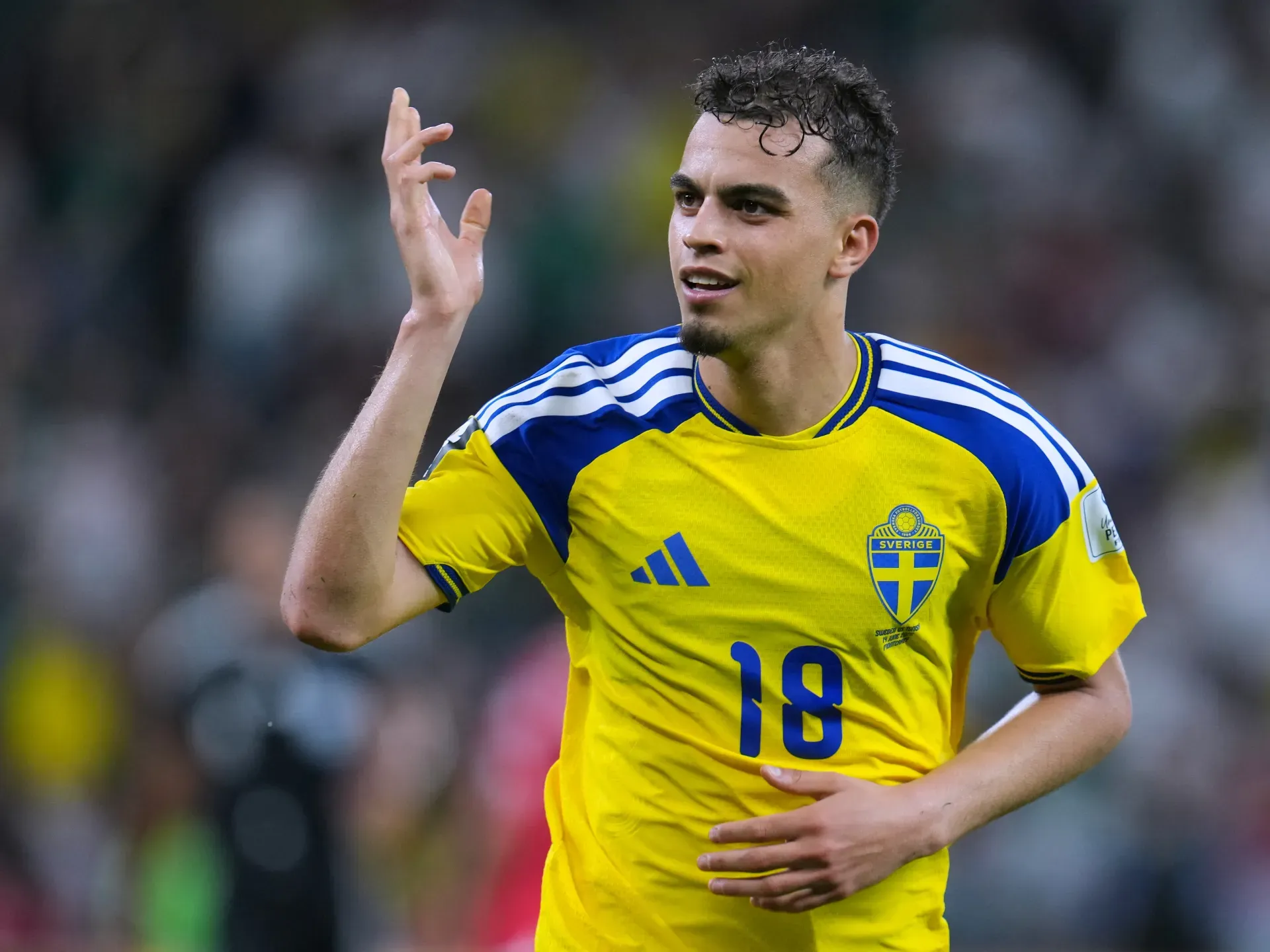
Monterrey erupted in celebration last night as Sweden dismantled Tunisia with a breathtaking 5-1 demolition in the World Cup’s opening Group F clash, sending shockwaves through the tournament’s early narratives. The Scandinavians, led by a clinical frontline, left no room for doubt: this was a statement performance that could redefine their campaign in Mexico.

Sweden’s Firepower Shatters Tunisia’s Defensive Wall
The match began with Sweden asserting dominance almost immediately, their midfield dictating tempo with surgical precision. Tunisia, known for their disciplined defensive structure, found themselves overwhelmed within the first 20 minutes, as Sweden’s attackers carved open gaps with alarming ease. The turning point arrived when midfielder Arij Ayari—making his first World Cup start—drifted into the box and unleashed a curling shot into the top corner, leaving Tunisia’s goalkeeper stranded. The goal was a masterclass in composure, a reminder that Sweden’s new generation is unafraid of the biggest stages.
By the 35th minute, the floodgates had burst wide open. Alexander Isak, Sweden’s towering striker, rose unchallenged to head home a pinpoint cross from Emil Svanberg, doubling the lead with a header that left the Tunisian defense in disarray. The Scandinavians, now playing with the swagger of tournament favorites, doubled down in the second half. Viktor Gyokeres, a name unfamiliar to casual fans but now etched into World Cup lore, added a third with a clinical finish before half-time, while Svanberg—operating as the creative fulcrum—completed his brace in the 68th minute to seal the rout.
Tunisia’s lone response came late, a consolation strike that did little to mask the gulf in class. When the final whistle blew, the scoreboard told a story of Swedish supremacy, but the manner of the victory spoke volumes about their ambitions in Monterrey.
Tunisia’s Resilience Tested Under Swedish Pressure
For Tunisia, the defeat was a harsh reality check. Their defensive frailties were exposed early, and their midfield—usually a bastion of control—was overrun by Sweden’s relentless pressing. Coach Jalel Kadri, a tactician known for his resilience, will have to regroup quickly if his side is to salvage anything from this tournament. Tunisia’s hopes of advancing now hinge on a dramatic turnaround against a resurgent Poland side in their next fixture.
The match also served as a reminder of Africa’s complex relationship with the World Cup. While nations like Morocco and Senegal have become continental powerhouses, Tunisia’s struggles in the group stage are a recurring theme. Their inability to convert possession into goals has cost them dearly in past tournaments, and last night was no exception. Yet, there were glimmers of promise—particularly in the final 15 minutes, where Tunisia pushed forward with renewed intensity, forcing Sweden into rare defensive moments.
For African fans watching from Dakar to Durban, the match underscored both the progress and the challenges facing the continent’s representatives. While Morocco and Senegal remain the continent’s brightest hopes, Tunisia’s stumble is a cautionary tale about the fine margins that separate success from disappointment in global football.
Sweden’s Golden Generation Steps Into the Spotlight
This was more than just a victory for Sweden; it was a declaration that their so-called “golden generation” is ready to make their mark on the world stage. Players like Isak, Svanberg, and Gyokeres—all in their mid-20s—have spent years developing in top European leagues, and their World Cup debuts have done little to suggest they belong in the shadows of more established nations.
The Swedes’ attacking trio, in particular, has drawn comparisons to past Scandinavian powerhouses. Isak, with his physical presence and clinical finishing, is the complete modern striker, while Svanberg’s ability to dictate play from midfield adds a layer of sophistication that few teams can match. Ayari, the surprise inclusion in the starting XI, justified his selection with a goal that announced his arrival on the global stage.
Coach Janne Andersson, known for his pragmatic approach, will be pleased with the balance his team displayed. Sweden’s defense, marshaled by veteran center-backs, held firm despite Tunisia’s late surge, while their midfield controlled the tempo with metronomic precision. If they can replicate this performance against Poland and Saudi Arabia, Group F could become a battleground for top spot in the group stages.
World Cup 2026: Early Lessons from Monterrey
The opening weekend of World Cup 2026 has already delivered drama, upsets, and tactical masterclasses. Sweden’s demolition of Tunisia is just the latest in a series of performances that challenge pre-tournament narratives. Gone are the days when Scandinavian teams were dismissed as one-dimensional or overly defensive; today, they play with the flair and confidence of a side that believes it can compete with anyone.
Meanwhile, Tunisia’s defeat raises questions about Africa’s representation in the knockout stages. While Morocco and Senegal remain strong contenders, other nations must address their tactical shortcomings if they hope to progress beyond the group stage. The World Cup is a stage where reputations are made and broken in a matter of 90 minutes—and Tunisia’s stumble serves as a stark reminder of that.
For neutral fans, the early matches have set the tone for what promises to be a thrilling tournament. Sweden’s attacking prowess, Tunisia’s defensive lapses, and the broader implications for African football all add layers to a narrative that is still in its infancy. As the group stages unfold, one thing is clear: the World Cup in 2026 is already delivering on its promise of unpredictability.
What’s Next for Group F?
With Sweden now sitting atop Group F, their next challenge comes against Poland—a side with its own World Cup pedigree and a history of grinding out results. A win for Sweden would all but secure their place in the Round of 16, while Poland will need a response to avoid an early exit. Tunisia, meanwhile, must rediscover their attacking rhythm if they are to keep their tournament hopes alive.
The final matchday in Group F could see all three teams still in contention, setting up a potential winner-takes-all scenario. For African fans, the stakes are high: a strong performance from Tunisia, Morocco, or Senegal could see the continent’s representation in the knockout stages reach new heights.
As the World Cup unfolds, one thing is certain: the early matches have already rewritten the script for Group F. Sweden’s dominance, Tunisia’s struggles, and the broader implications for global football have set the stage for a tournament that promises to be as unpredictable as it is exhilarating.
World News Today: The Bigger Picture
Beyond the confines of Monterrey, the World Cup serves as a microcosm of global football’s shifting dynamics. Scandinavian teams, once dismissed as underdogs, are now asserting themselves as genuine contenders. Meanwhile, African nations continue to punch above their weight, even if the path to the knockout stages remains fraught with challenges.
The tournament is also a reminder of football’s power to unite and divide. For every moment of brilliance, there are setbacks that test the resilience of players and fans alike. Tunisia’s defeat, while disappointing, is not the end of their World Cup story—just as Sweden’s victory is not the beginning of their coronation. The beauty of the World Cup lies in its unpredictability, and this year’s edition is already delivering on that promise.
As the days progress, the focus will shift to the knockout stages, where the margins between glory and heartbreak are razor-thin. For now, Sweden’s World Cup journey is off to a flying start, while Tunisia must regroup if they are to salvage anything from their campaign. One thing is certain: the World Cup in 2026 is shaping up to be a spectacle that will be remembered for years to come.
Copyright notice: Images and source material are credited to their respective owners/source (original source where available). If you are the copyright owner and want an image or content removed, please contact us at topix.news/contact-us; we will review and remove it promptly.

Topix News Desk is a digital editorial team focused on delivering clear, timely, and useful news coverage for readers worldwide. Our reporting highlights African news with global context, including politics, business, economy, technology, health, sports, entertainment, travel, and culture. We aim to publish accessible, well-structured, and informative articles that help readers understand the stories shaping Africa and the world.